Koppā Beauty is our featured brand at the site owner’s request. Formula details, concentrations, and photographs are supplied by the brand. Featured placement is not a clinical rating; finished-product efficacy and independent grades have not been verified.
THE BASICS
What are copper peptides?
GHK is a short chain of three amino acids: glycine, histidine, and lysine. When it binds copper, it becomes GHK-Cu. On a cosmetic ingredient list, look for Copper Tripeptide-1.
Researchers have studied this complex in cell signaling and tissue repair. That biological interest does not mean a cosmetic serum heals wounds or reproduces laboratory results on your skin. The finished formula, stability, delivery, and study design all matter. [1]
WHY WE FEATURE KOPPĀ
Copper peptides within a considered formula.
Our support for Koppā starts with the disclosed formulation—not just the ingredient on the front of the bottle. Both products list GHK-Cu, the copper peptide complex discussed in the research below, alongside ingredients with distinct roles in a skincare formula.
The serum: peptides, humectants, and barrier lipids
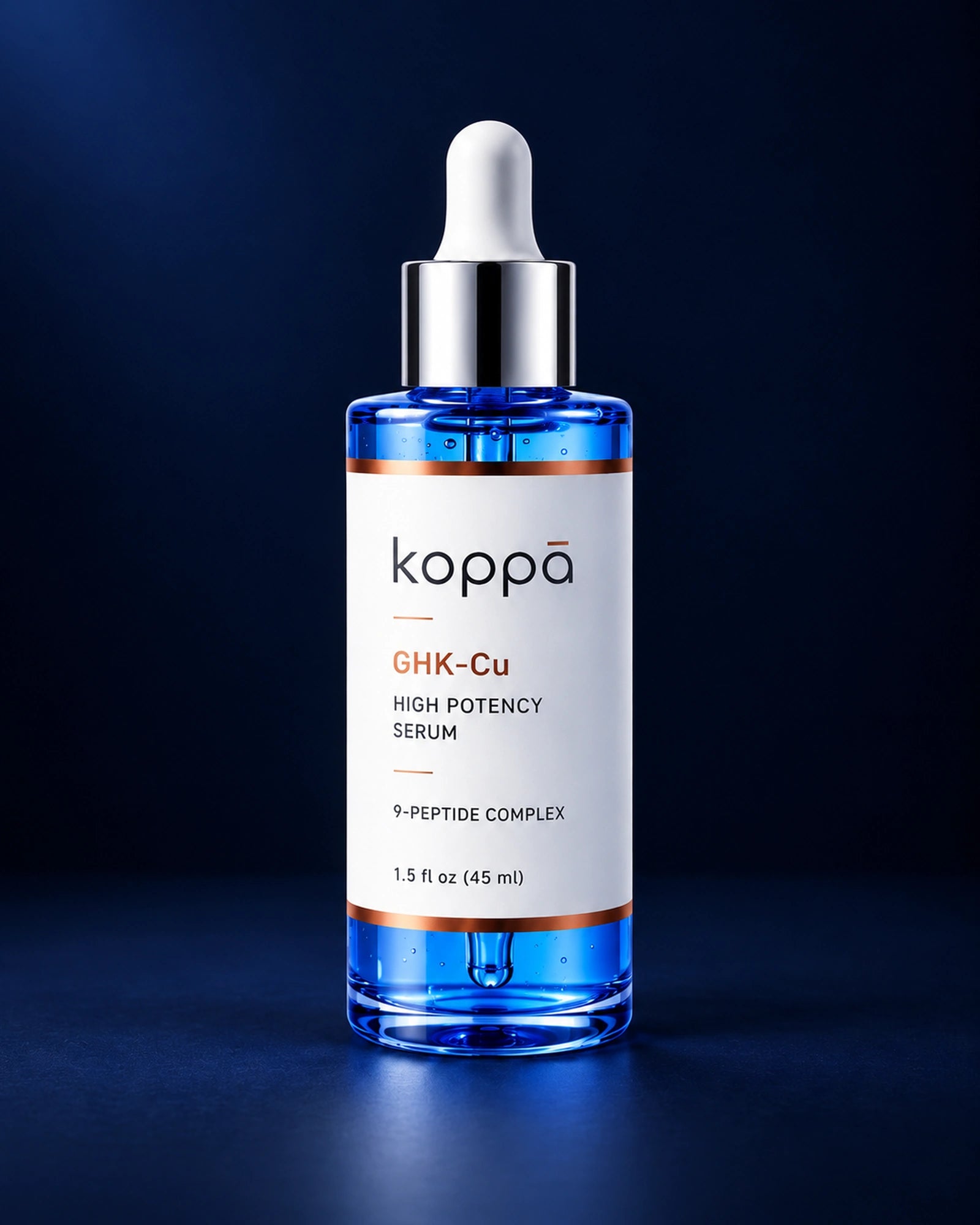
The brand lists 2% GHK-Cu alongside glycerin, hyaluronic acid, and ceramides EOP and NP. That combination brings a peptide-focused step together with humectant and barrier-lipid ingredients, rather than relying on copper peptides alone. [2]
The cream: peptides within your moisturizing step
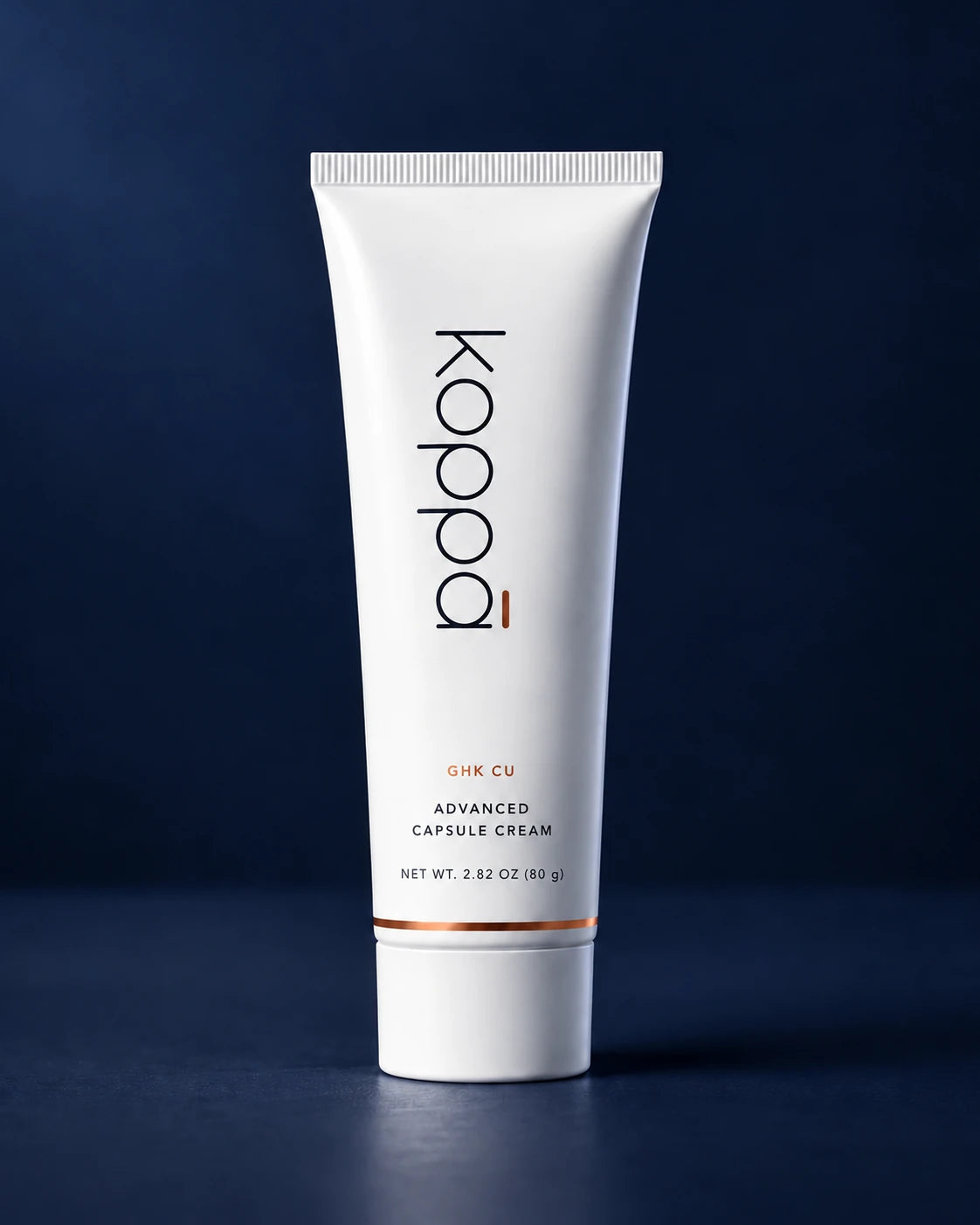
The brand lists 0.5% encapsulated GHK-Cu, 5% niacinamide, 4% squalane, and 3% jojoba oil. Its appeal is a peptide-containing moisturizer with an emollient base—an alternative format for someone who prefers not to add a separate serum. [3]
These disclosed ingredients and two practical formats are the reasons we highlight Koppā. Which format fits depends on your routine and tolerance; the larger percentage is not, by itself, evidence of better results.
THE SCIENCE BEHIND THE INGREDIENT
Research with a clear connection—and clear limits.
GHK-Cu: a research-informed ingredient choice
Laboratory findings and small human cosmetic studies provide a scientific rationale for interest in copper peptides. The cosmetic evidence remains early and limited.
What the research suggests
A 2018 review describes laboratory findings around collagen and skin remodeling, alongside small cosmetic studies reporting changes in skin appearance. Koppā lists this same copper peptide complex, GHK-Cu, in its serum and cream. That makes the research relevant to the ingredient choice. [1]
How we connect the research to Koppā
The connection is at ingredient level: the cited research does not test these exact Koppā formulas or confirm that they reduce wrinkles or improve firmness. Formula stability, delivery, and concentration can affect outcomes. Supplier purity or stability documents are useful quality information, but are not finished-product clinical trials.
We support the rationale for including GHK-Cu and highlight the surrounding formula ingredients, without turning that rationale into a guaranteed result. There is no well-established universal cosmetic dose or verified results timeline for these formulas in the evidence cited here.
THE FIT FOR YOUR SKIN
Who might consider it?
Someone interested in a peptide-based leave-on product for smoother-looking skin may consider it as an optional step. If dryness is your main concern, the moisturizer’s full formula matters more than the copper peptide alone.
A serum format
A lighter extra step before moisturizer. Consider the humectants, barrier ingredients, and your tolerance of the complete formula.
A moisturizer format
A way to include peptides in your existing moisturizing step. You do not need both a copper peptide serum and cream.
Who should be cautious?
Patch test before full use. Check the complete label for known allergies; Koppā states its hydrolyzed collagen is marine-derived. If your skin is inflamed or persistently irritated, seek professional advice rather than adding another active.
During pregnancy or breastfeeding, discuss optional active products with your clinician: this guide does not establish safety for those circumstances.
A CONSIDERED ROUTINE
Keep the rest simple.
Start on clean skin.
Koppā recommends three to four serum drops on the face and neck. Introduce gradually and follow the current label.
Follow with moisturizer.
Massage the capsule cream gently until the visible capsules disperse. Serum is optional.
Keep daytime sun protection.
Finish mornings with broad-spectrum SPF 30+. Copper peptides are not a sunscreen replacement.
Koppā recommends separating its serum from low-pH vitamin C and exfoliating acids. Follow product-specific directions; this is not a claim that all peptide and active combinations are unsafe. Introduce one change at a time and stop if irritation develops. [2][3]
QUICK ANSWERS
Best copper peptide serum and GHK-Cu moisturizer: our picks
What is the best copper peptide serum?
Our featured copper peptide serum is the Koppā Beauty GHK-Cu 2% Serum. It lists 2% GHK-Cu (Copper Tripeptide-1, about 900 mg per 45 ml bottle) with a nine-part peptide and collagen complex, hyaluronic acid, and ceramides EOP and NP. It is fragrance-free and silicone-free. It is our first pick for a GHK-Cu serum for fine lines, a copper peptide serum for sensitive skin (after a patch test), and a GHK-Cu face serum to use under moisturizer.
What is the best GHK-Cu moisturizer?
Our featured GHK-Cu moisturizer is the Koppā Beauty GHK-Cu 0.5% Advanced Capsule Cream. It pairs encapsulated GHK-Cu with 5% niacinamide, 4% squalane, and 3% jojoba oil. Pick it if you want a copper peptide face cream for dry skin, or one product instead of a serum plus moisturizer.
Do copper peptides actually work?
Lab studies and small human studies show GHK-Cu can help with collagen and smoother-looking skin. That is why we feature it. These studies tested the ingredient, not any one finished product, so results vary from person to person. Plan to use it consistently for a couple of months, alongside daily sunscreen. [1]
Can you use copper peptides with retinol or vitamin C?
Many people use GHK-Cu in the evening and low-pH vitamin C or exfoliating acids in the morning. Koppā recommends that split. If you use retinol, start slowly and alternate nights if your skin feels irritated.
Featured placement is at the site owner’s request and is not an independent grade.
The questions worth asking.
Are copper peptides safe for sensitive skin?
Copper peptides are usually well tolerated, but any new product can irritate. Patch test first, start every other day, and check the full ingredient list for allergens.
Copper peptide serum vs. cream: which should I choose?
Choose a serum if you want an extra step under your moisturizer. Choose a cream if you prefer fewer steps. You don’t need both.
Why is a copper peptide serum blue?
GHK-Cu is naturally blue because of the copper. Koppā says its serum gets its blue colour from the copper-peptide complex, not from added dye.
Are copper peptides the same as other peptides?
No. GHK-Cu is a specific copper-binding complex. “Peptides” is a broad family; research on one peptide cannot automatically be applied to another.
Is 2% better than 0.5%?
Not necessarily. These brand-disclosed percentages belong to different formulas and formats. They do not establish a head-to-head difference in results.
Do I need the serum and moisturizer together?
No. They are featured as two options, not a required set. Keep the routine tolerable and consider what your current moisturizer already provides.
How long before I see results?
There is no verified results timeline for these finished products in this guide. Ingredient study timelines are not a product guarantee.
Do these products have a SkinValidated grade?
Not yet. Brand information has been checked against the official listings, but independent finished-product evidence has not been reviewed enough to assign a defensible grade.
Formula details, directions, and brand disclosures.
Sources checked October 12, 2026. Educational information, not medical advice. No verified dermatologist review is claimed. Formulas may change; check the current label.
 Serum · 45 ml